Dark legends from the 13th century have evolved over the centuries, terrifying Icelanders with tales of famine and darkness. During harsh winters, they encouraged frugality and discipline. The memory of some of these monsters has survived to this day, and their modern depictions can be found in works of culture. Let’s take a look at this unique collection of monsters!
The text and photos were created by Iwona Strychalska. If this article helped you learn more or inspired you to create, follow Iwona’s profile by clicking here!
Before Santa Came, the Monsters Descended. The Dark Face of Icelandic Jól
Yule was not always a time of celebration. Before Christian bells reached Iceland, December — the season of Jól — was a period when a pale fear fell upon the island’s inhabitants. While most Scandinavian countries prepared for feasting and offering gifts to the gods, Icelanders listened for the footsteps of beings born from the harsh landscape long before the first settlers arrived. In a gloomy cave hidden somewhere in the depths of Dimmuborgir, the “Dark Castles” — a lava formation near Lake Mývatn in the northern part of the country — evil awakened, ready to set out on the hunt…
Grýla, for that was her name, was a gigantic troll-woman and the mother of all wickedness; the embodiment of everything most dangerous in Icelandic nature: hunger, darkness, and mercilessness. She roamed the snow-covered wastelands, listening for the beating hearts of children who misbehaved — those who lied, cheated, or disobeyed their parents. It was believed that Grýla spent the entire year preparing a list of her victims. Naughty children ended up as ingredients in her ghastly stew. And the troll’s appetite was insatiable…
The Old Norse word grýla meant “a monster” or “something that inspires fear.” The first written mentions of her appeared in the 13th century. In the Saga of Sverrir, she served as a metaphor for great danger — a shapeless force of nature — and in Snorri Sturluson’s Prose Edda, her name appeared on a list of mythical troll-women. Interestingly, she was not originally associated solely with Christmas; she was simply a monster who could appear at any time of year to abduct people — most often during storms, fog, or in dark ravines. Folk tales even spoke of a “spring Grýla,” who awoke from her winter sleep particularly irritable with hunger.
In later periods, as pagan customs blended with the new faith, the troll-woman became firmly rooted in the season of Jól. It was believed that summer was a time of dormancy for Grýla — for trolls, sunlight is deadly; contact with its rays turns them to stone. With nearly 24 hours of daylight in June and July, Grýla was forced to remain deep inside her cave in Dimmuborgir. She was less aggressive then, spending her time resting or quarreling with her husband, Leppalúði. Yet even during those months, Icelandic parents warned their children not to approach lava fields or caves, because “Grýla sleeps there, and she may wake up hungry.”
A Creature Born of Nightmares
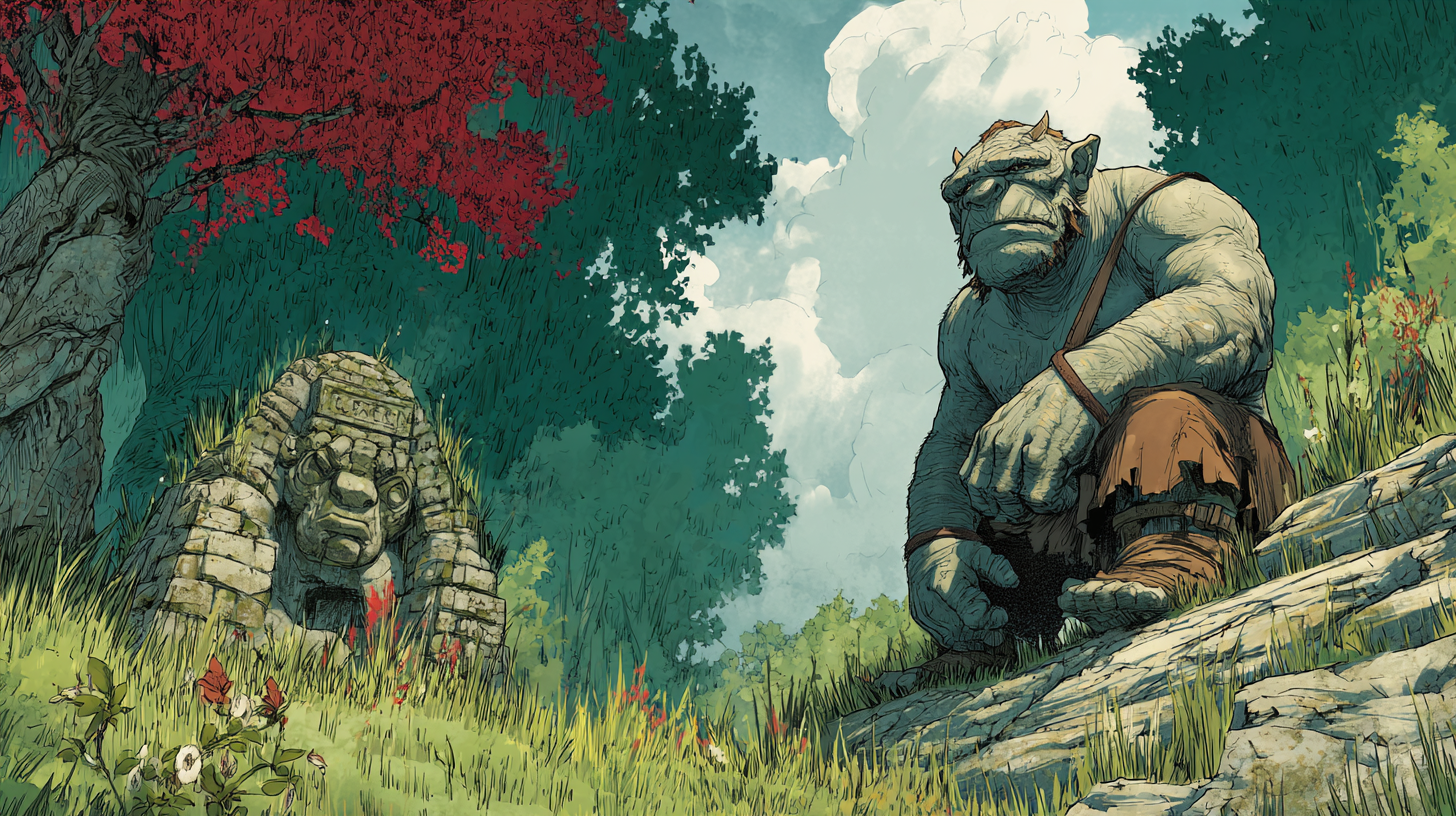
Grýla’s appearance evolved over the centuries. As I mentioned earlier, in the oldest accounts she was a hybrid shaped from primal fears — part troll, part beast, part raw force of nature. Later, her form became increasingly macabre.
Try to picture this monstrosity. When Grýla roamed the mountains, her head reached the clouds. She was so heavy that her footsteps made the earth tremble, a phenomenon Icelanders associated with mild volcanic quakes.
Some sources claim she had three heads. Others describe a single head, but with extra pairs of eyes on the back of her skull, making it impossible to approach her from behind. Grýla’s eyes were enormous, bulging, and glowing with a murky yellow light. They resembled smoldering embers or lanterns. Her unnaturally long, hook-shaped nose — covered in warts and rough, flaking skin — allowed her to sense the “scent of sin” in children from many kilometers away. Black teeth, sharp as shards of lava, jutted from her wide mouth.
Her skin resembled the bark of an ancient tree or hardened lava — rough, tough, and nearly impossible to pierce with ordinary weapons. Grýla had unnaturally long arms and hands tipped with iron claws. With these she seized her victims and tossed them into her sack. Instead of human feet, she was often said to have goat hooves or huge, furry bear paws, which helped her move swiftly across slippery rocks and glaciers.
Terrified yet? The worst is still ahead. Grýla’s tails were perhaps the most unique part of her appearance. The troll-woman possessed fifteen tails (though some songs mention forty). Each tail held a hundred sacks — and each sack could fit twenty children. One more enormous bag, the Grýlupoki, she carried on her back. These sacks were made of thick animal hides, and blood was said to drip from them constantly… Grýla often leaned on a massive staff made from a whale bone or a tree trunk washed ashore.

Over time, as life in Iceland became somewhat more stable, Grýla began to lose her mythical heads and tails in favor of more human — though still repulsive — traits. By the 19th century she was often described simply as a filthy, malicious old hag with yellowed teeth.
A key moment came in 1932 with the poems of Jóhannes úr Kötlum. The author gave Grýla and her sons (whom you’ll read about later) their final, canonical form. Today, Grýla is almost a fairy-tale figure. Still dangerous, but often portrayed with a touch of humor — an eternally hungry cave-housewife who can’t manage her thirteen unruly sons. In Reykjavík or Akureyri you’ll see her on posters as an ugly old woman in a headscarf, looking more like an evil witch than the original three-headed monster from the 13th century.
A Ghastly Clan
When Grýla returned from a successful hunt, the rest of her “lovely” family awaited her in the cave — her husband Leppalúði and their thirteen sons.
Leppalúði was Grýla’s third husband. The first two (Gusti and Boli) were likely eaten or killed by her once they no longer pleased her. And Leppalúði himself didn’t seem destined to last long at her side. He was skinny, filthy, and lazy. His only task was to keep the fire burning under the cauldron while Grýla hunted.
Grýla and Leppalúði’s sons, the Jólasveinar — the Yule Lads — were originally bandits who murdered livestock and robbed people. Later, their image softened, though they remained a nuisance to Icelanders.
The Yule Lads were described as beings suspended somewhere between the world of trolls and humans. Always dirty, dressed in ragged wool, they had oversized body parts and unnatural agility. Each one descended from the mountains on a specific day, starting on December 12, and stayed below for the next thirteen days, competing with his brothers to bring Grýla the best loot or to frighten people the most.
- On December 12 came the first: Stekkjastaur, Sheep-Cote Clod. Despite his unnaturally stiff legs, which made movement difficult, he obsessively broke into sheepfolds to suck milk straight from the ewes.
- Right behind him, on December 13, emerged Giljagaur, Gully Gawk. This silent thief could wait for hours in hiding for the moment the milker set down the bucket — only to skim off the richest cream.
- On December 14, Stúfur, Stubby, scratched at the doors. Though unimpressive in height, he made up for it with boldness, stealing pans to scrape off the burnt fat with obsessive precision.
- On December 15, households were visited by the unnaturally thin Þvörusleikir, Spoon-Licker. As you might guess, he stole dirty wooden spoons and licked them clean with his rough tongue. His physique was proof enough that a leftovers-only diet does not build strength…
- On December 16, Pottaskefill, Pot-Scraper, had his moment. His tactic was clever: he knocked on the door, and when the residents went to see who was there, he slipped into the kitchen and emptied the unwashed pots.
- On December 17 came Askasleikir, Bowl-Licker. His specialty was hiding under beds and waiting for someone to set down an askur — a traditional lidded bowl — which he immediately seized.
- On December 18, the peace of night was shattered by Hurðaskellir, Door-Slammer. This troublemaker didn’t steal food; instead, he took sadistic pleasure in waking sleeping people by slamming doors loudly in the middle of the night.
- On December 19, pantries trembled before Skyrgámur, Skyr-Gobbler. This mighty troll could devour an entire household’s supply of skyr in a single night, leaving families without precious protein for the rest of winter.
- On December 20, from above, watched Bjúgnakrækir, Sausage-Swiper, who perched on rafters like a predatory bird, waiting for the chance to snatch smoked meat drying in the smoke.
- On December 21, Gluggagægir, Window-Peeper, stood beneath the windows. His huge, bulging eyes scanned the interiors of homes in search of valuables he could steal under cover of darkness.
- A day later, on December 22, came Gáttaþefur, Doorway-Sniffer. Equipped with a gigantic, twitching nose, he could detect the smell of frying laufabrauð even through the worst blizzard, allowing him to locate his target with perfect accuracy.
- The second-to-last, on December 23, was Ketkrókur, Meat-Hook. Using a long pole with a hook at the end, he pulled the best pieces of roast straight through the chimney before they could reach the Christmas table.
- The procession ended on December 24 with Kertasníkir, Candle-Stealer. In times when tallow candles were the only source of light and a luxurious gift, this troll followed children to steal their single spark of brightness in the polar night.
Today, the evolution of the legend has turned the Jólasveinar into peculiar gift-givers — Iceland’s local “Santas.” Starting on December 12, every child in Iceland places a shoe on the windowsill each evening, hoping for a visit from the next brother descending from the mountains. The rules, however, remain strict and echo old discipline. If the child behaved well, they find sweets or a small gift in the morning. But if they caused trouble, they receive a cold, hard potato — a symbol of disappointment and a warning that the trolls are still watching. It’s a subtle wink to tradition: the Yule Lads no longer devour children, but they can still spoil their mood, reminding everyone of their wild origins.
The Trolls’ Residence
Most Icelandic tales point to one specific and remarkably eerie place: the already‑mentioned Dimmuborgir, which literally means “Dark Castles” or “Dark Cities.” These lava formations were created around 2,300 years ago during a massive volcanic eruption. Hot lava flowed across wetlands, and the water trapped beneath it began to boil, forming pillars of steam that solidified into gigantic black towers, caves, and arches. To early Icelanders, the place looked like the ruins of a fortress built by unclean forces. It was believed that this was where Grýla carved out her main stronghold.
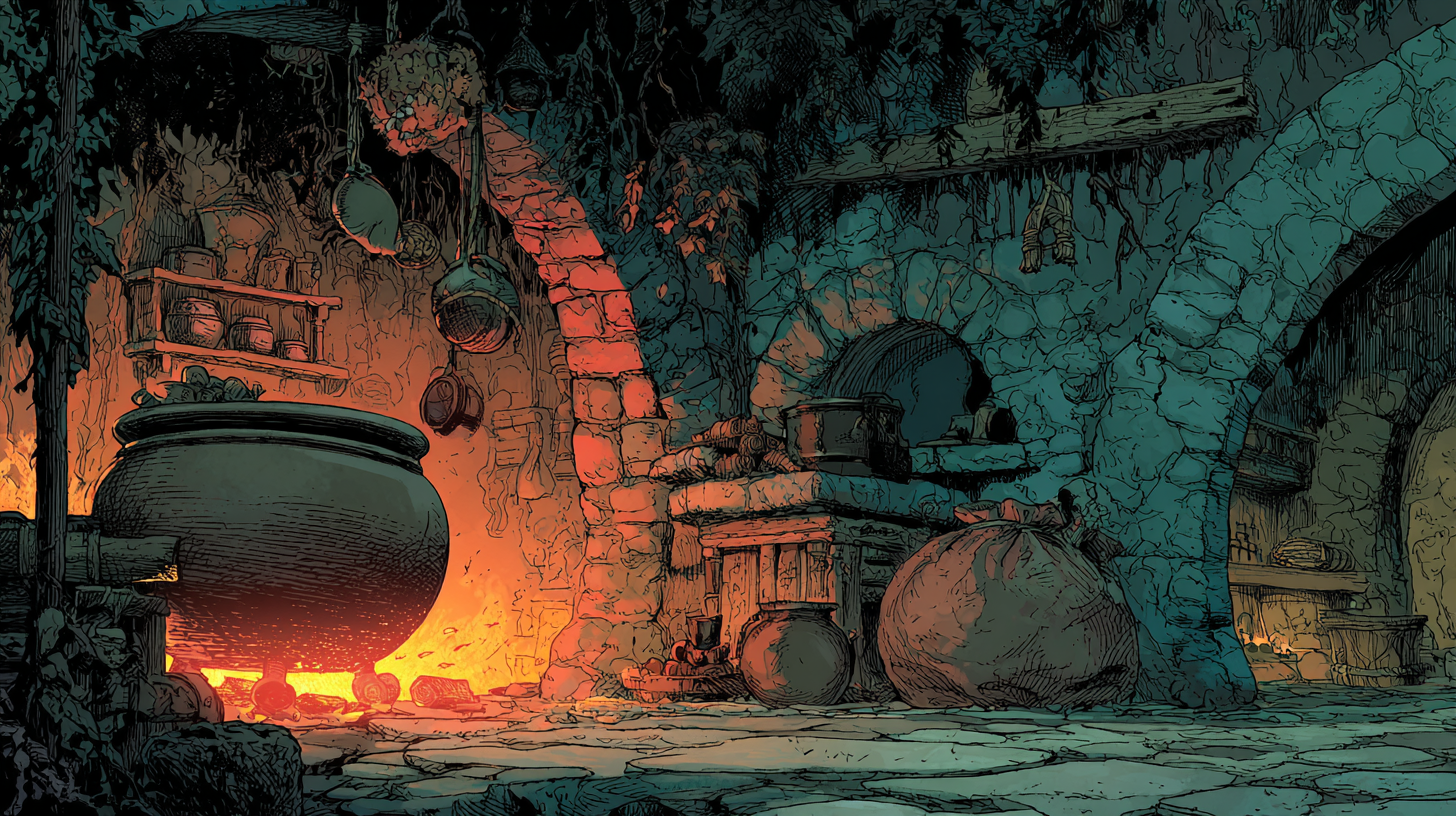
At the very heart of the lava fields lay the troll-woman’s lair — a cave known as Grýluhellir. It was a vast, damp, suffocating grotto. At its center stood a great iron cauldron, with a fire that never went out. The cave walls were lined with the skins of those who had not survived encounters with trolls, and in the dark niches and rocky crevices piles of sacks for naughty children were stacked…
Today, Dimmuborgir is a popular tourist destination, but after dusk, when shadows stretch across the black rocks, the place regains its original, ominous character.
Although Dimmuborgir is the most famous, some older legends place the trolls’ dwelling in other parts of the island — always in places inaccessible to mortals. Some tales from the Reykjavík area suggested that Grýla lurked in the caves of the Esja mountain range, conveniently close to the capital; others claimed she lived in Lúdentarborgir, another chain of volcanic craters near Lake Mývatn.
Grýla and Her Sons as a Social Symbol
In old Iceland, Grýla served a “pedagogical” function. Winter on the island was a struggle for survival. Food supplies were limited, and every pair of working hands was invaluable. The troll-woman became the personification of punishment for wastefulness (she devoured those who did not respect provisions) and disobedience. She disciplined children so they would not wander away from their homes during blizzards — something that, in such a harsh climate, usually ended in death from exposure. Meanwhile, the band of thirteen brothers embodied the very real fears of Icelandic farmers: hunger, darkness, and the loss of precious goods.
By the 18th century, however, the use of these figures as threats had spiraled out of control. Parents used drastic descriptions of Grýla to “break the will” of their children, which caused lasting psychological harm — some children became physically ill from terror. The situation grew so serious that in 1746 a royal decree was issued forbidding parents from using these legends as a disciplinary tool. It was one of the first legal acts in history aimed at protecting the mental well‑being of children.
Jólakötturinn — the Cat That Doesn’t Purr
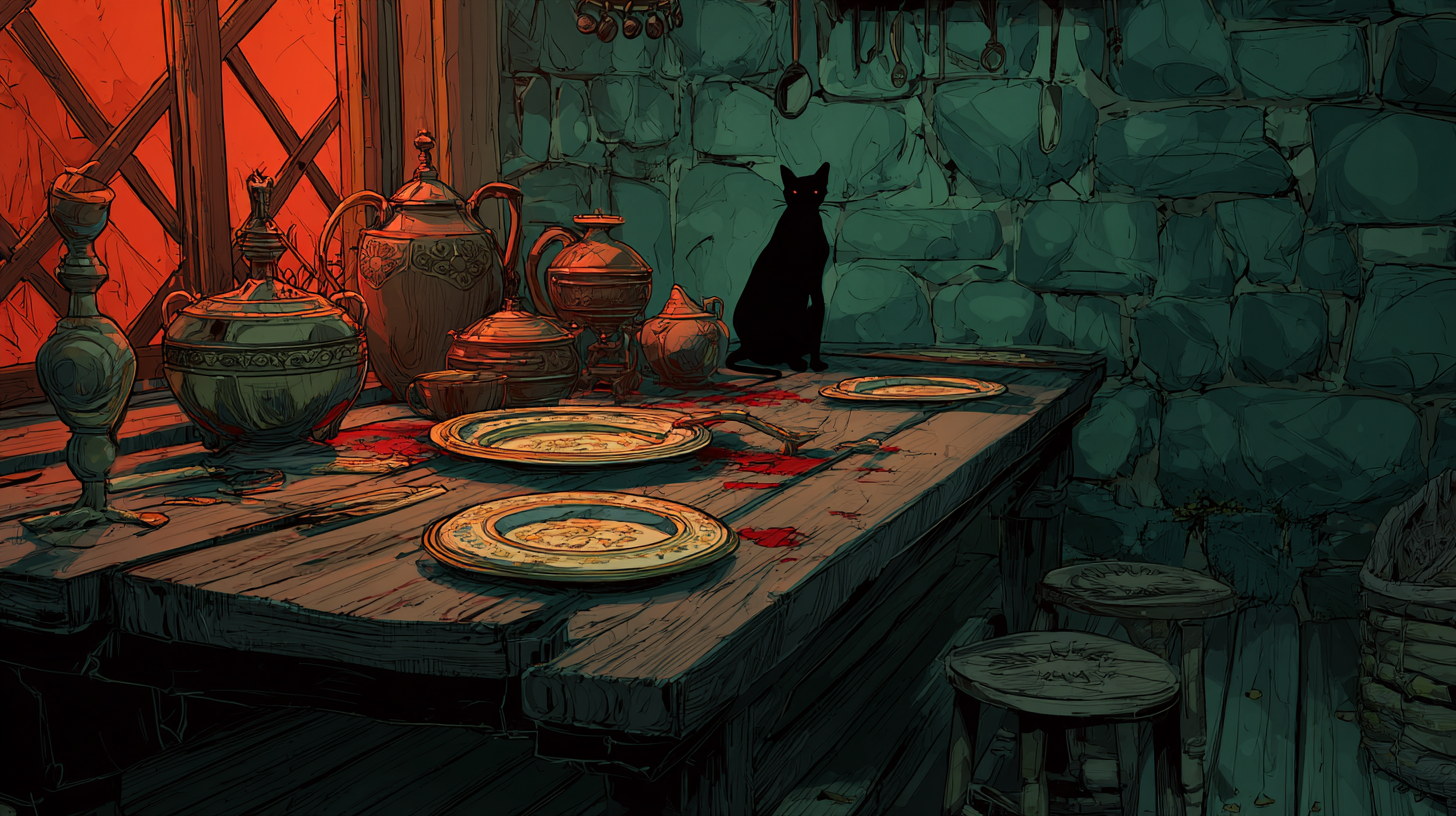
If you thought Grýla was the only evil lurking in Iceland’s lava fields, you were mistaken. Every great force casts a shadow, and the troll-woman’s shadow was Jólakötturinn — the Christmas Cat. Forget cheerful purring and soft paws. This “household pet” of Grýla was a monster the size of a small cottage, with coarse black fur and claws sharp as obsidian. Its eyes didn’t reflect light — they generated it, burning with a yellow glow that sliced through the darkness of the polar night.
Guardian of Wool and Discipline
Compared to the rest of the troll family, Jólakötturinn entered Icelandic folklore relatively late — not until the 19th century. The introduction of this creature had a far more practical purpose than Grýla herself. Jólakötturinn did not hunt mice. His prey was people.
The Christmas Cat was the guardian of work. According to legend, anyone who did not receive a new piece of clothing before Christmas Eve became his victim. Why clothing? In old Iceland, survival depended on wool. Autumn was a season of brutal labor — spinning, weaving, knitting. A new pair of socks or a hat under the Christmas tree wasn’t just a gift; it was proof that a household member had worked hard enough to earn their place through the winter. Anyone who slacked off risked hearing claws scratching on the roof once the last candle went out…
The Christmas Cat did not sneak like an ordinary animal. He peered through windows, staring directly into the faces of terrified residents. He wasn’t looking for naughty children — he inspected the household for old, tattered wool. If he found someone who hadn’t renewed their clothing, he would break down the door with his massive shoulders. According to the darkest tales, the Cat first devoured his victim’s Christmas dinner, and only then — as the main course — consumed the unfortunate soul.
From Cave to the Streets of Reykjavík
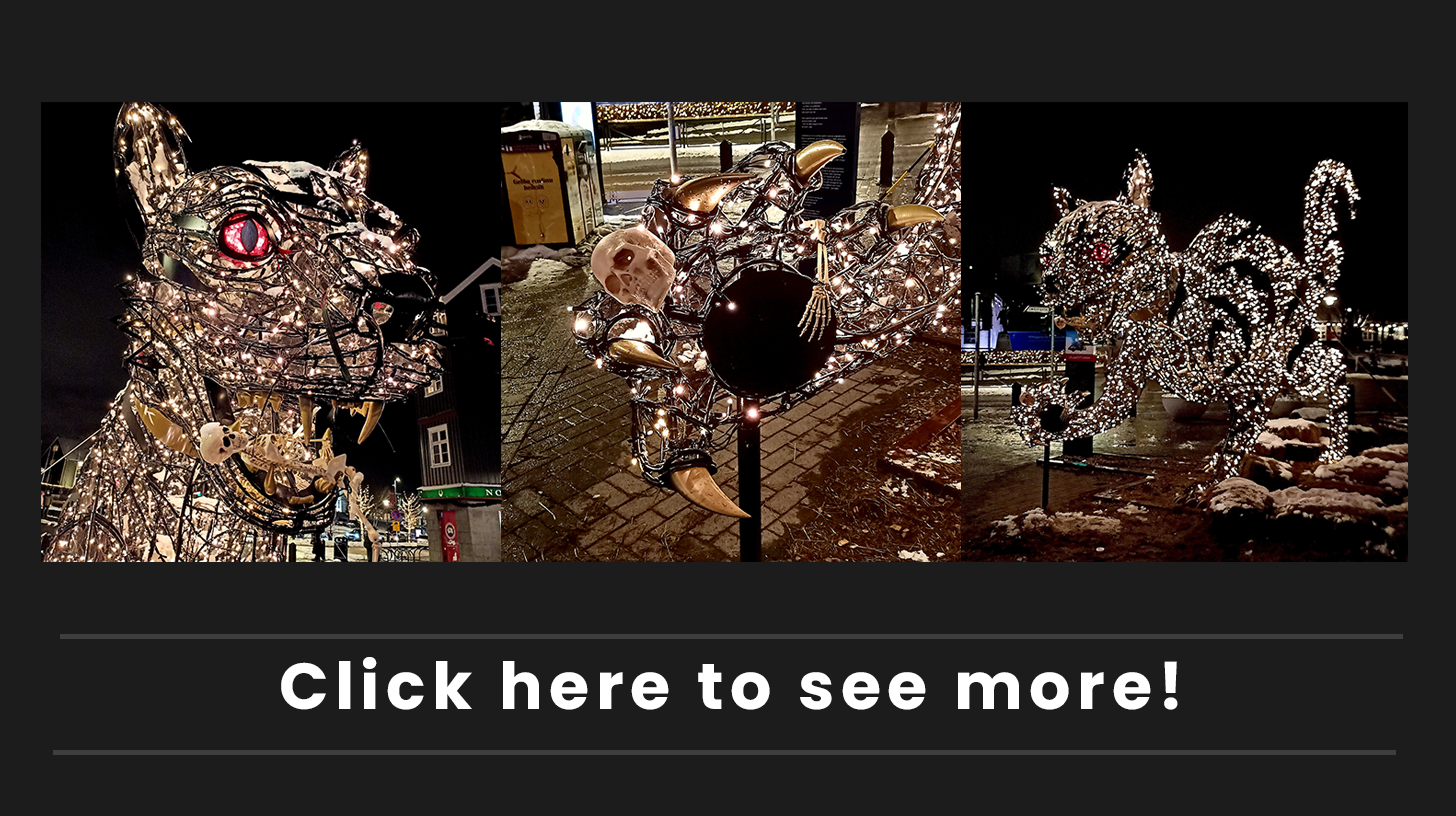
Though for centuries Jólakötturinn was a tool of terror used to frighten farmhands and children, today he has become an icon. Since 2018, a massive metal sculpture of the Christmas Cat has stood in Reykjavík’s Lækjartorg square. Illuminated by thousands of lights, with huge glowing eyes, it reminds tourists and locals of the dark roots of Icelandic Christmas. It’s a perfect example of how Icelanders have tamed their fears, transforming a bloodthirsty beast into a fascinating piece of cultural heritage.
So next time you feel a shiver down your spine during a December walk, don’t turn around too quickly. Perhaps it’s only the wind — or perhaps Jólakötturinn is checking whether your coat is new enough…





Comments (0)